As an Amazon Associate I earn from qualifying purchases. This post contains affiliate links, which means we may earn a commission if you buy through them — at no extra cost to you.
Quick verdict
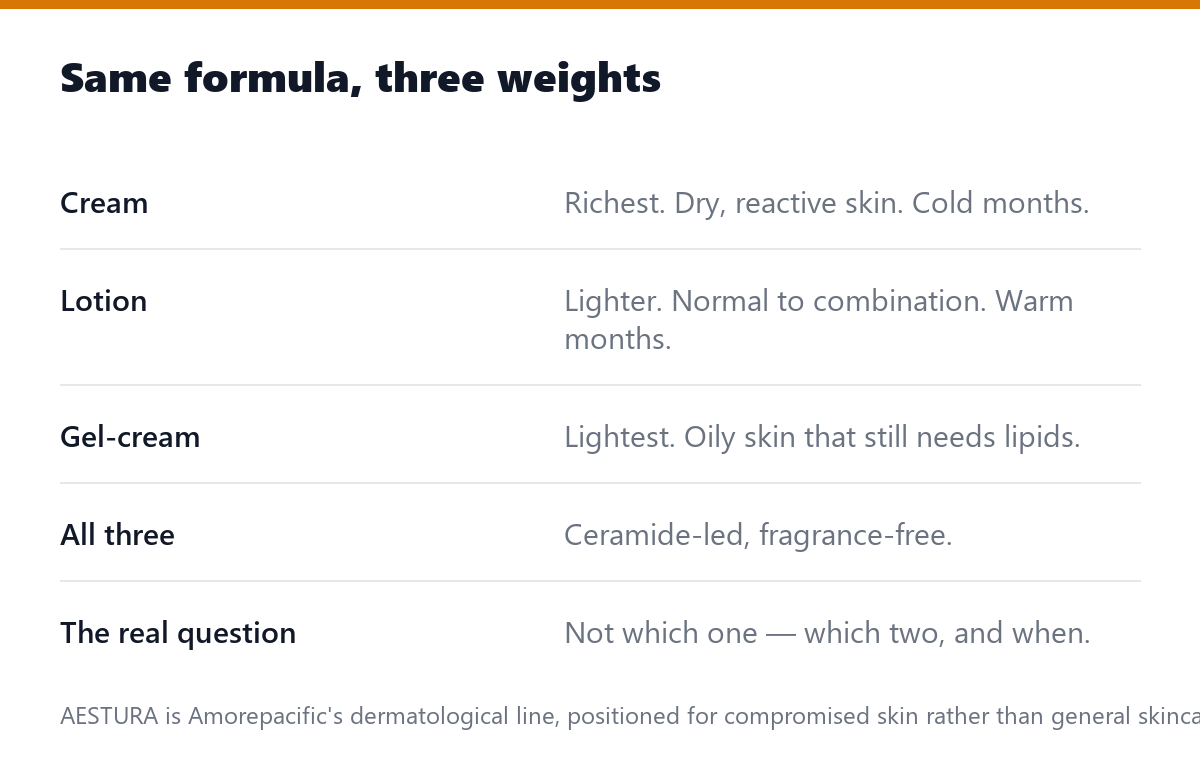
Same barrier technology in three textures: cream for dry or reactive skin and cold weather, lotion for combination skin and warmer months, gel-cream for oily skin that still needs barrier support. Most people should own two and switch between them rather than looking for the one that works all year. The cream is the one to start with if your skin is currently unhappy.
The Atobarrier 365 line solves one problem in three textures, and the choice trips people up because the obvious answer — pick by skin type — is only half of it.
The other half is the season, and ignoring it is why people conclude a product stopped working when it only stopped matching the weather.
What the line is built on
AESTURA is Amorepacific’s dermatological brand, positioned for compromised and easily-irritated skin rather than general skincare. That positioning shows in the formulas: ceramide-led, fragrance-free, and deliberately unexciting.
The technology the line advertises is a ceramide capsule system — lipids held in a structure that releases them into the skin over time rather than all at once. The claim is about duration of comfort rather than a different mechanism.
Whether the capsule system performs as described is not something you can verify from a label. What you can verify is that these are ceramide-led formulas without fragrance, which is the specification that matters for actual barrier repair. Humectant-heavy products cannot do that job, whatever they cost.
The Atobarrier 365 cream
The richest of the three, and the one to buy if you are choosing on symptoms rather than skin type.
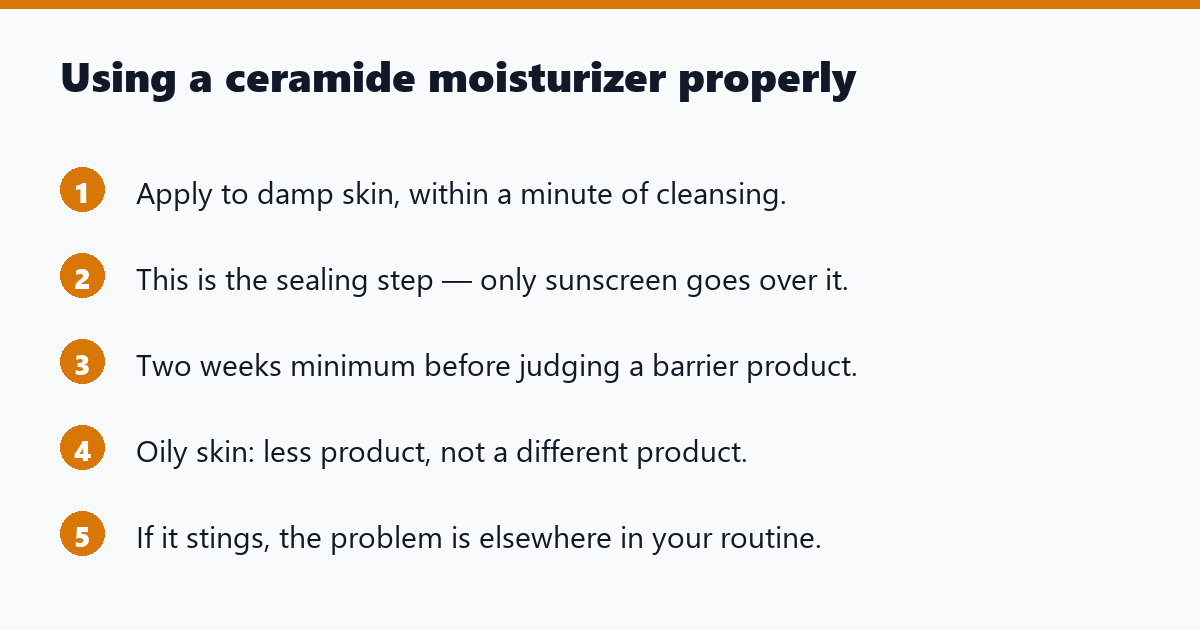
Skin that stings when you apply things, feels tight after cleansing, or flakes in patches is not dry — it is compromised, and it needs the heaviest lipid delivery of the three. This is also the right choice for cold weather regardless of your usual skin type, and for anyone in the adjustment phase of a retinoid.
Check the current price on Amazon
The lotion
The same barrier work in a texture that does not feel like a cream. It comes in a larger bottle, which tells you something about intended use — this is a body-and-face, use-generously product rather than something you ration.
For normal to combination skin, or for anyone who found the cream too heavy in summer, this is the version that actually gets used. A moisturizer you skip because it feels heavy is worse than a lighter one you apply.
Check the current price on Amazon
The gel-cream
The lightest, aimed at oily or breakout-prone skin that still needs lipids — a combination people frequently assume is contradictory.
It is not. Oily skin can have a damaged barrier, and often does, because the usual response to oiliness is stripping cleansers and daily exfoliation. The gel texture makes the barrier step tolerable for skin that rejects anything richer.
Also worth knowing: this is the one to reach for after sun exposure, when skin is hot and reactive and a heavy cream feels wrong.
Check the current price on Amazon
Why most people should own two Atobarrier 365 textures
This is the part the cream-versus-lotion comparisons usually miss.
Your skin is not one condition all year. Oily in August and oily in January are different situations, and a routine that never changes is wrong for at least one of them. The same person can reasonably use the gel-cream through summer and the cream from November.
Buying one and forcing it through twelve months is how people conclude a good product does not work for them. Two products alternated beats one product compromised.
Who this line suits
Reactive, easily-irritated skin. Fragrance-free ceramide formulas are the right specification, and this is what the brand is built for.
Anyone starting a retinoid. The cream during the adjustment period makes the difference between continuing and quitting.
People who want fewer decisions. One line, three weights, same specification — pick by texture and stop researching.
Who should look elsewhere
Anyone wanting visible results. This is maintenance and repair. Nothing here fades marks or resurfaces texture.
People who like fragrance in skincare. There is none, deliberately, and that is the point of the line.
Anyone whose only complaint is dullness. That is a brightening problem, not a barrier one. Different category entirely.
FAQ
Which one should I buy first?
The cream, if your skin is currently unhappy. It has the most lipid delivery and you can always move lighter once things settle.
Is the lotion just a watered-down cream?
It is a lighter texture with the same barrier intent, not a weaker product. For combination skin in summer it is the better choice, not the compromise.
Can oily skin use a ceramide cream?
Yes, and oily skin frequently needs one. Oiliness and a damaged barrier are unrelated conditions that often occur together. Use less product rather than choosing none.
How long before I notice anything?
Two weeks minimum for barrier repair, and the sign is what stops rather than what starts — less stinging, less tightness, fewer reactions to things that used to bother you.
Keep reading
haruharu wonder Black Rice: Toner or Essence?
numbuzin Numbers: They Aren’t Strengths or Steps
The bottom line
The Atobarrier 365 line gives you one specification in three weights, which makes the decision simpler than it looks: match the texture to your skin and the season, not to a review.
Start with the cream if your skin is struggling now, move lighter as it settles, and expect to switch again when the weather does.