
As an Amazon Associate I earn from qualifying purchases. This post contains affiliate links, which means we may earn a commission if you buy through them — at no extra cost to you.
Quick verdict
Squalane is squalene with the unstable bonds removed. That single change makes it shelf-stable and non-comedogenic, which is why it is the oil that oily and acne-prone skin can actually use. Squalene — the raw form your own skin produces — oxidises, and oxidised squalene is associated with congestion. If a label says squalane, that is the one you want.
Two ingredients, one letter apart, and the difference decides whether the product breaks you out.
The squalane vs squalene distinction is the most consequential spelling difference in skincare, and almost nobody notices it on a label.
Squalene is what your skin already makes
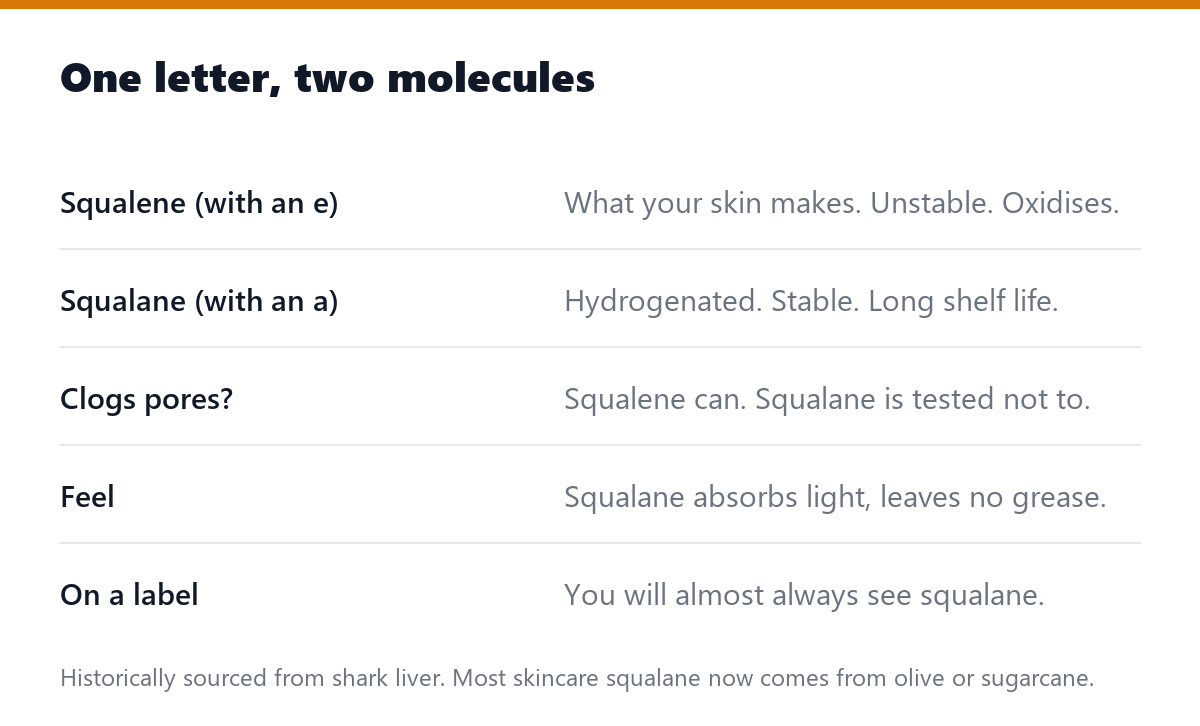
Squalene — with an e — occurs naturally in human sebum. Your skin produces it, and it is part of what keeps the surface soft.
It is also chemically unstable. The molecule has reactive double bonds, which means it oxidises on contact with air and light.
That instability matters, because oxidised squalene is associated with clogged pores and inflammation. Research has connected it with comedone formation. So the raw form your skin makes is not something you would want to add more of from a bottle.
The squalane vs squalene fix
Squalane — with an a — is squalene with those reactive bonds saturated through hydrogenation.
One change, three consequences:
- It does not oxidise. Long shelf life, stable in a formula, no rancidity.
- It is tested as non-comedogenic. The property that made squalene a problem is the one that was removed.
- It stays light. Absorbs quickly, leaves no greasy film — unusual for an emollient.
This is why squalane is the ingredient we keep pointing at when explaining that “oil-free” tells you nothing useful. Squalane is an oil by any everyday definition and one of the least likely things in skincare to congest a pore.
Where it comes from
Worth knowing because the sourcing changed and the reputation has not caught up.
Squalene was historically extracted from shark liver oil, which is where the ingredient’s uncomfortable association comes from. Most squalane in skincare today is plant-derived — olive or sugarcane are the common sources — and the finished molecule is identical either way.
If it matters to you, brands sourcing from plants generally say so on the packaging. Silence is not evidence of shark sourcing, but the ones that avoid it tend to advertise the fact.
Who it suits, which is nearly everyone
Oily and acne-prone skin. The headline case. Skin that has been avoiding every oil can usually use this one, and the emollient step is what a lot of oily routines are missing.
Dry skin. Works too, though it is light enough that very dry skin will want something richer over the top.
Reactive skin. A single, simple, well-tolerated molecule with no fragrance and nothing to react to. This is the emollient to try when everything else has caused problems.
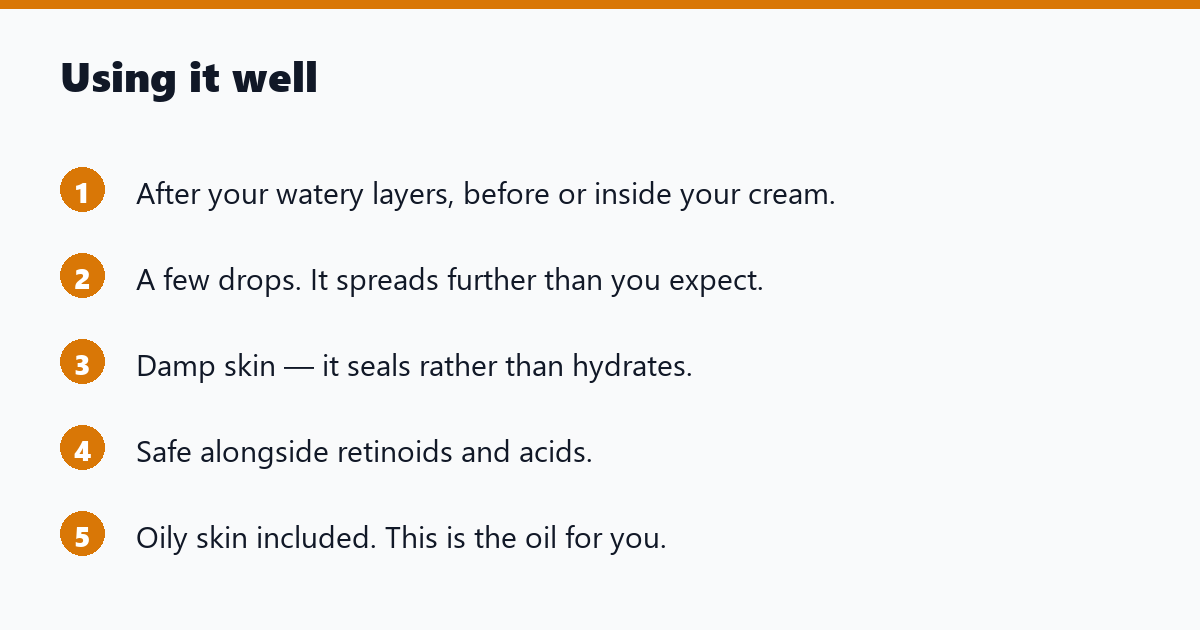
Anyone using actives. Nothing here conflicts with retinoids or acids, and it makes the adjustment period more comfortable.
Check the current price on Amazon
What it does not do
It does not hydrate. This is the most common misunderstanding. Squalane is an emollient and a light occlusive — it softens and helps hold water in. It does not put water into skin.
So it needs something underneath. Squalane on dry skin softens the surface without addressing the actual dehydration, which is the water-versus-lipids distinction in another form.
It does not treat anything. No brightening, no acne treatment, no resurfacing. It is a supporting ingredient that makes a formula feel better and work more comfortably.
Telling squalane vs squalene apart on a label
- Check the spelling. Squalane is the stable one. Squalene on an ingredient list is unusual and worth a second look.
- Position matters as usual. High on the list means it is doing real work; near the bottom means it is a supporting player.
- Pure squalane oils exist and are effectively single-ingredient products. Simple, and easy to add to a routine without changing anything else.
- In a cream it usually pairs with humectants, which is the sensible combination — water from one, sealing from the other.
Who can skip it
Anyone whose moisturizer already works. Squalane is likely already in it. This is not an ingredient to chase separately if your routine is settled.
People wanting visible results. There are none to see. It is comfort and barrier support, not treatment.
Very dry skin in winter, alone. Too light on its own. Use it under something more substantial.
FAQ
Will squalane clog my pores?
It is tested as non-comedogenic and is among the least likely oils to cause congestion. Squalene, the unhydrogenated form, is the one associated with clogging.
Is plant squalane different from shark squalane?
The finished molecule is the same. The difference is sourcing rather than performance.
Can I use it every day?
Yes, morning and night. There is nothing to build tolerance to and nothing to cycle.
Oil or cream?
A pure oil gives you control over the amount and adds nothing else. A cream gives you humectants alongside it. For most routines the cream is the simpler purchase.
The bottom line
The squalane vs squalene difference is one letter and one hydrogenation step, and it turns an ingredient linked to congestion into one of the few oils that oily skin can wear comfortably.
Check the spelling on the list. If it ends in -ane, it is the one you want, and it is probably already in something on your shelf.