As an Amazon Associate I earn from qualifying purchases. This post contains affiliate links, which means we may earn a commission if you buy through them — at no extra cost to you.
Quick verdict
A pair of 10 lb neoprene dumbbells plus a 10 lb vest covers strength and loaded walking for a beginner — for less than a rack, in a cupboard’s worth of space. Start the vest at one or two short sessions a week.
Check the dumbbells’ price on Amazon → or see the weighted vest
Building a beginner home gym usually goes wrong in the same way: someone buys a rack, a bench, and a full weight set, uses it enthusiastically for three weeks, and then owns furniture.
Two items cover most of what a beginner actually needs, take up almost no space, and are hard to outgrow quickly. A pair of dumbbells and a weighted vest.
Why these two
They barely overlap, which is the point.
Dumbbells handle resistance training — pushing, pulling, squatting, pressing. A single pair supports a genuinely complete beginner routine covering arms, shoulders, chest, legs, and core.
A weighted vest handles loaded movement — walking, stairs, and bodyweight exercises made harder. It turns activity you already do into training, which is a much lower barrier than adding a new workout to your week.
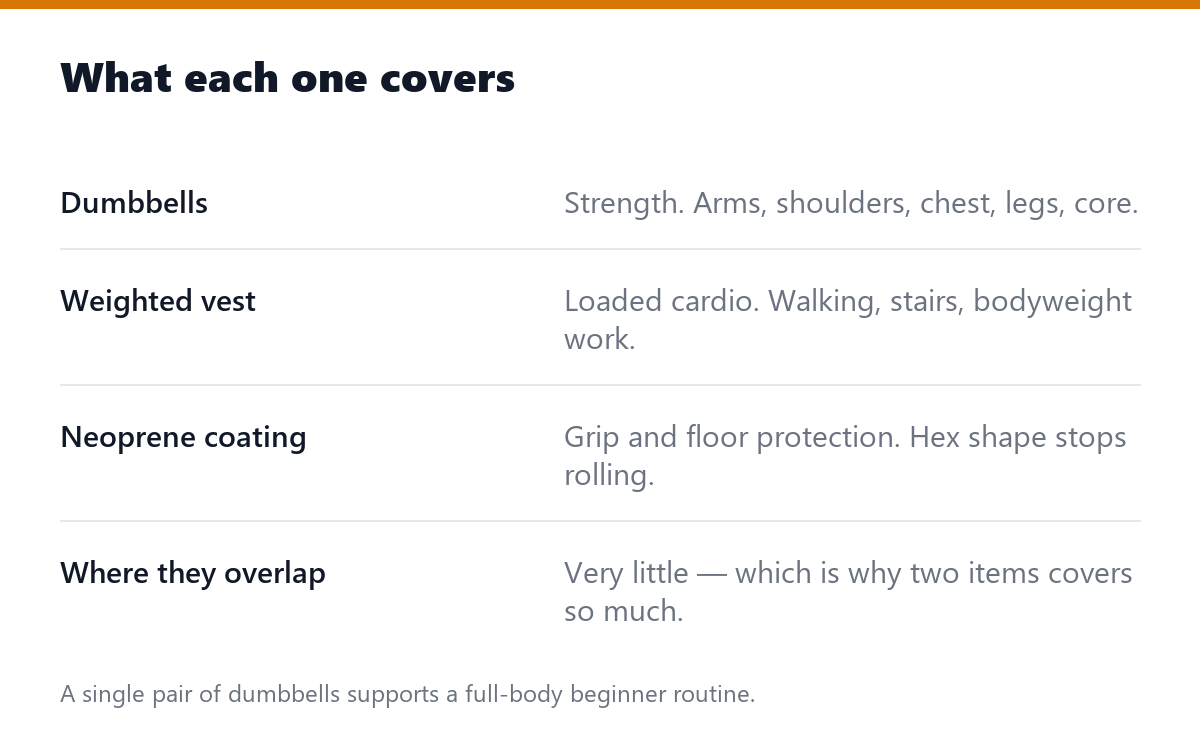
Between them you have strength and conditioning covered, in a corner of a room, without a rack.
Picking the dumbbell weight
The most common mistake is buying too light, using them twice, and concluding that dumbbells do not work.
For most beginners, 10 lb is the useful starting point. It is heavy enough to actually stimulate a muscle and light enough that form does not collapse. Lighter than that and most exercises stop being training and become movement.
Two features worth having. The neoprene coating gives a secure grip when your hands are sweaty and protects your floor when you inevitably set one down harder than intended. The hexagonal shape stops them rolling away, which matters more than it sounds in a room that is not a gym.
You will eventually outgrow a single pair for some movements — legs before arms, always. That is a problem for six months from now, and by then you will know whether you want to invest further.
The weighted vest, and the part people get wrong
This is the item with an actual safety consideration, and most content about it skips straight to calorie burn.
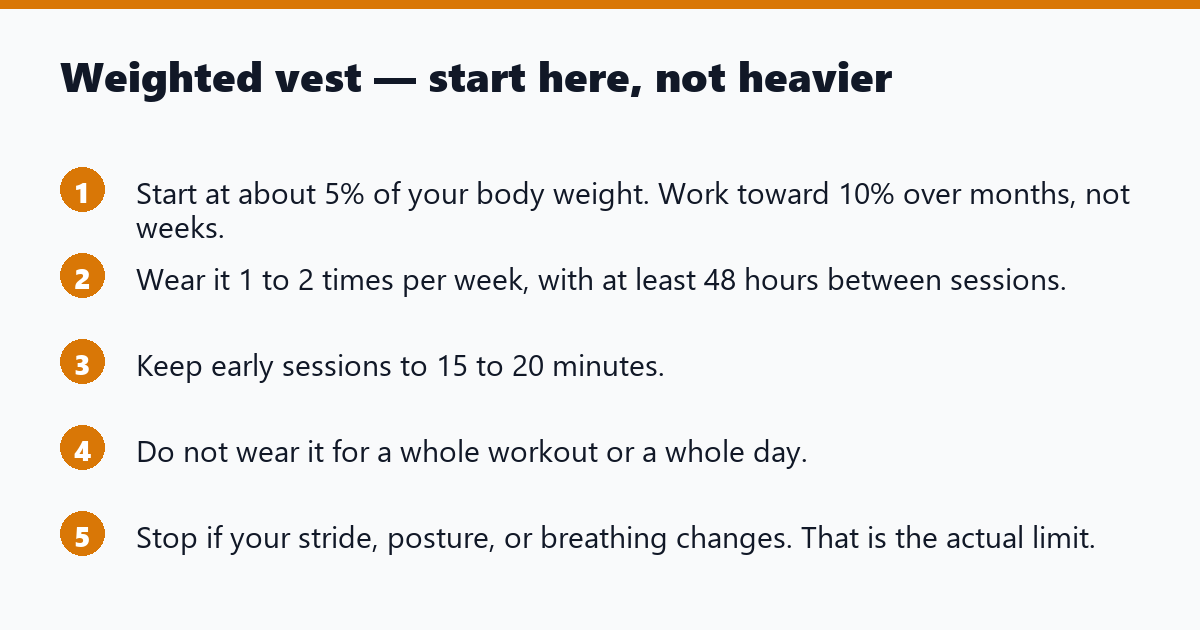
The starting guideline is about 5% of your body weight, working gradually toward 10% over months if everything feels fine. For a large share of adults that puts a 10 lb vest right at the sensible entry point.
The reason the number matters: a weighted vest loads your spine, hips, knees, and ankles on every single step. Your muscles adapt to that load faster than your connective tissue does. Which means you can feel completely fine while accumulating strain in tendons and joints that shows up weeks later.
Practical limits worth respecting: one or two sessions a week with at least 48 hours between them, and 15 to 20 minutes to start. Do not wear it for an entire workout, and do not wear it around the house all day.
The signal to stop is not fatigue. It is change in movement quality — if your stride shortens, your posture slumps forward, or your breathing pattern changes, that session is done. Those are the mechanics that lead to injury, not the tiredness.
Check the weighted vest on Amazon
What to look for
- Dumbbells: coating and shape over brand. A hex neoprene dumbbell is a cast iron weight in a rubbery jacket. There is not much to differentiate here, and paying a lot more rarely buys anything.
- Vest: fit before weight. A vest that shifts while you walk is worse than a lighter one that stays put, because a moving load makes your gait compensate. Adjustable straps matter more than the number on the label.
- Vest: how the weight sits. Weight distributed across the torso is far more comfortable than weight concentrated on the chest or shoulders.
- Reflective detailing if you will walk outdoors early or late. Genuinely useful rather than a marketing feature.
Who this setup suits
Anyone starting out who wants to find out whether they will stick with training before spending seriously. The failure mode of home gyms is abandonment, not insufficient equipment.
People short on space. Both items fit in a cupboard. Neither requires a dedicated room.
Walkers who want more from a walk they already take. This is where the vest earns its place — you are not adding a workout, you are loading an existing habit.
Who should skip it
Anyone with existing knee, hip, or back problems should talk to a physio before adding a weighted vest. Loading a joint that already hurts is not progressive overload.
Anyone significantly overweight who is starting to walk for fitness. You are already carrying extra load with every step. Adding more before building a base is the wrong order, and the vest can wait.
Anyone who already trains seriously. A single 10 lb pair will not challenge you, and you know what you need better than a starter guide does.
FAQ
Is one pair of dumbbells really enough?
For a beginner, for several months, yes. You adjust difficulty by changing reps, tempo, and exercise selection rather than by adding weight. Slow the lowering phase down and a 10 lb dumbbell gets a lot heavier.
Can I wear the weighted vest for running?
Not as a beginner. Running already multiplies impact force through your joints, and adding load on top is how people end up with shin and knee problems. Walking, hiking, and stairs first. Give it months.
How long until I see anything?
Strength gains in the first weeks are mostly neurological — you get better at the movement before the muscle changes. Visible change takes a couple of months of consistency. Anything promising faster is selling something.
Keep reading
Rainleaf Microfiber Towel Review: Cheap, and Mostly Fine
Stanley Quencher FlowState Review: The Leak Nobody Mentions
The bottom line
A pair of 10 lb neoprene dumbbells and a 10 lb vest cover strength and loaded conditioning for a beginner, cost far less than a rack, and store in a cupboard.
The one thing worth taking seriously is the vest progression. Start light, twice a week, short sessions, and let your joints catch up to your enthusiasm. That is the difference between this being useful equipment and being an injury you spend two months recovering from.