
As an Amazon Associate I earn from qualifying purchases. This post contains affiliate links, which means we may earn a commission if you buy through them — at no extra cost to you.
Quick verdict
One of the cheapest packable towels that still does the job: dries fast, packs tiny, absorbs less than premium options. Right for gym bags and weekend trips; spend more if it will be your only towel for weeks.
The Rainleaf Microfiber Towel shows up in nearly every travel and camping packing list, and the reason is not that it is the best packable towel. It is that it is cheap, small, and dries fast — which for most trips is the entire specification.
It is worth knowing where it falls short before you buy, because there is one situation where it will annoy you.
What microfiber towels are actually for
The point of a microfiber towel is not that it dries you better than cotton. It does not. A cotton bath towel absorbs more water and feels considerably nicer against skin.
The point is drying time and pack size. A wet cotton towel stays wet for a day, weighs a lot, and takes up half a daypack. A microfiber towel wrings out nearly dry, packs down to roughly the size of a fist, and is ready to use again in an hour or two.
That trade — comfort and absorbency traded for weight and drying speed — is the whole product category. If you would not make that trade, buy a cotton towel and stop reading.
Where the Rainleaf lands
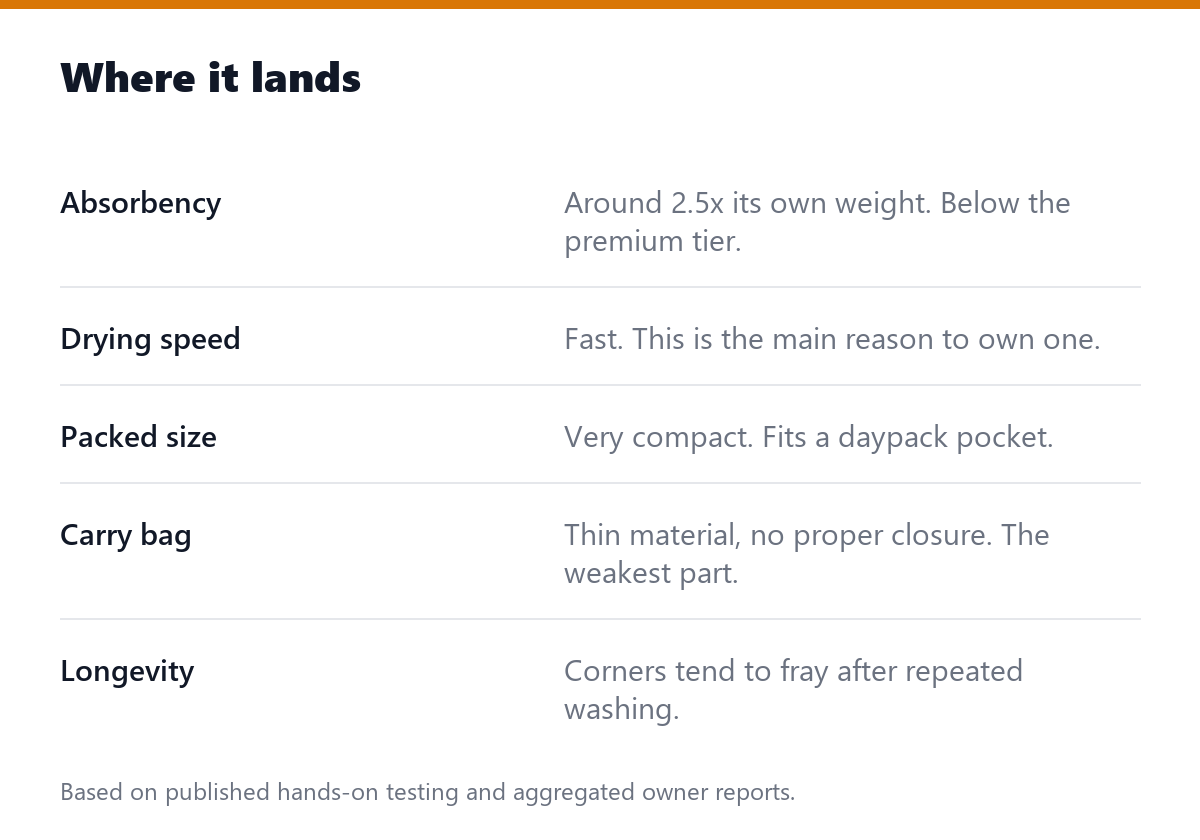
Testing puts its absorbency at roughly two and a half times its own weight. The better microfiber towels manage more. In practice this means that for a full-body dry after a shower, you will likely wring it out partway through — noticeable, not ruinous.
Drying speed and packed size are where it does well, and those are the two things you actually bought it for.
The carry bag is bad
This is the most consistent complaint and it is fair. The included pouch is thin material with a pillowcase-style opening rather than a real closure. It works, in the sense that the towel goes inside and stays there most of the time. It is not something that survives being buried in a pack for a season.
It is a small thing, and it is also the part people replace first. If you are packing this for a long trip, plan on a small dry bag instead.
Longevity
The corners tend to fray after repeated use and washing. The towel keeps working — fraying is cosmetic and does not spread quickly — but it does not stay looking new.
Wash it on cold without fabric softener. Softener coats microfiber fibres and destroys the capillary action that makes them absorbent in the first place, which is the single fastest way to ruin any towel of this type. That is not a Rainleaf flaw; it kills expensive ones just as efficiently.
What to look for in a packable towel
- Size, honestly assessed. The temptation is to buy the smallest one. A towel too small to actually dry you is worthless however little it packs down. For full-body use, go a size up from what looks sufficient.
- A hanging loop that is positioned well. These towels only dry fast if you hang them. A loop in a bad corner means the towel hangs folded and stays damp.
- Absorbency ratio if it is published. Anything around 2.5x is budget tier; the better ones go higher. Whether that is worth the price difference depends on whether you are drying off once a day or five times.
- Ignore the included bag. Assume you will replace it. Nobody makes a good one at this price.
Who this suits
Gym bags. This is arguably the best use case. You need something to wipe down with, it needs to not stay damp and start smelling in a bag, and you do not need luxury. It handles this well.
Backpacking and travel where weight matters. Small, light, dries overnight. The absorbency gap against premium towels matters less when the alternative is carrying a wet cotton brick.
Anyone who wants a spare towel for the car or a day bag without thinking about it much.
Check the current price on Amazon
Who should spend more
Anyone using it as their only towel for weeks. On a long trip where this is your daily shower towel, the absorbency difference stops being academic and becomes a daily irritation. Buy the better one.
Anyone who finds microfiber texture unpleasant. It has a slightly grabby feel against skin that some people genuinely dislike. Price does not fix this — it is inherent to the material.
Beach use, mostly. Sand sticks to microfiber and is irritating to shake out. There are sand-resistant beach towels designed specifically around this problem.
FAQ
Can I use it as a beach towel?
You can, but sand clings to the fabric and does not shake off cleanly. For drying off after a swim it is fine; for lying on, buy something made for the job.
Does it smell after a while?
Only if you pack it damp repeatedly. Microfiber holds odour once bacteria establish. Hang it to dry fully before packing and wash it on cold regularly, and it stays fine.
Why does everyone say not to use fabric softener?
Because softener leaves a coating on the fibres that blocks water absorption. A softened microfiber towel pushes water around instead of soaking it up, and the effect is permanent. This applies to every microfiber towel, not just this one.
The bottom line
The Rainleaf Microfiber Towel is a competent budget towel that is average at most things and very good at being cheap and small. For a gym bag or a weekend pack, that combination is exactly right.
For weeks of daily use as your only towel, the absorbency gap is real and worth paying to close. And whatever you buy, plan on replacing the bag it comes in.