As an Amazon Associate I earn from qualifying purchases. This post contains affiliate links, which means we may earn a commission if you buy through them — at no extra cost to you.
Quick verdict
Pick the line before the product: Heartleaf for oily, congested, or reactive skin; Rice for dullness and dryness; PDRN for plumping. Buying the famous toner without checking which line it belongs to is how most people end up with the wrong bottle.
Anua went from an unknown Korean brand to something close to a default recommendation in about two years, and the growth created a specific problem: people buy the product they saw rather than the product that suits them.
The brand does not organise its range by skin type or by routine step. It organises by hero ingredient, into three lines that target genuinely different things. Get the line right and this is one of the more reliable brands at this price. Get it wrong and you have bought something well made that does nothing for your particular skin.
The three lines, and who each one is for
This is the whole decision, so it is worth being precise about it.
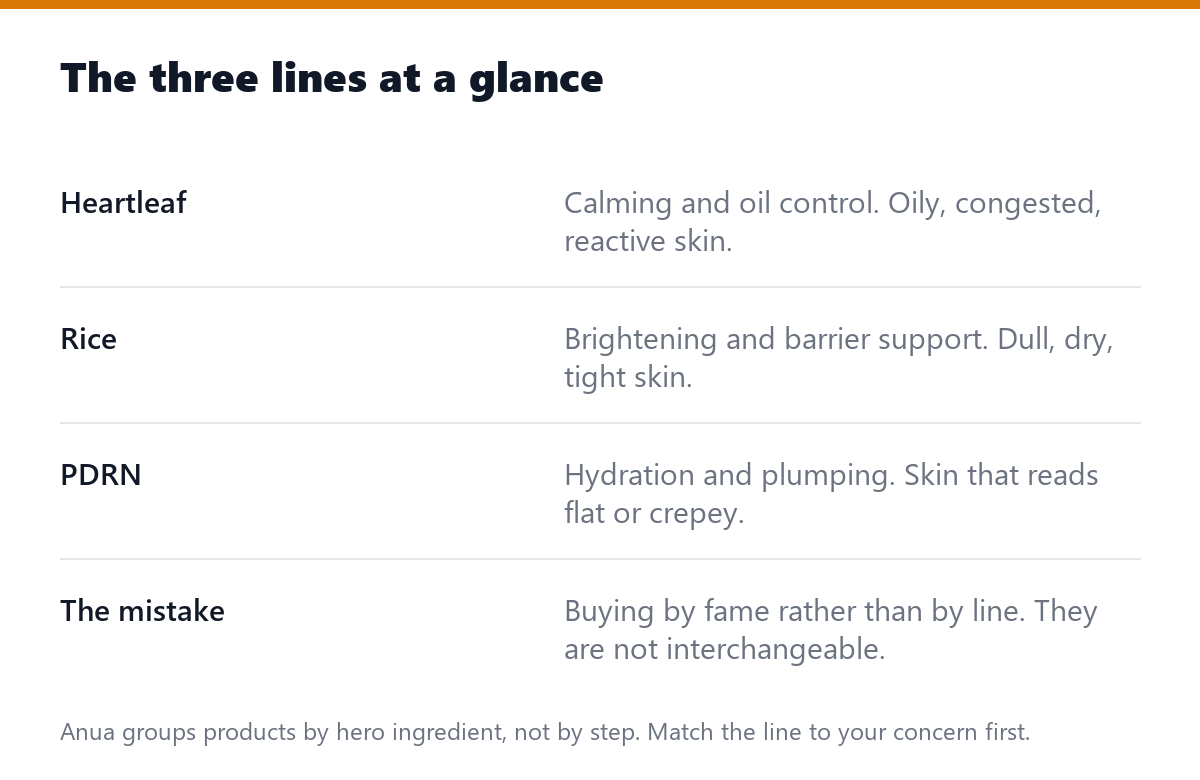
Heartleaf is built on houttuynia cordata, a plant used for its anti-inflammatory properties. This line exists to calm things down and manage oil. It is the right answer for skin that is congested, reactive, prone to redness, or breaking out.
Rice targets dullness and barrier support. The textures run richer and milkier, aimed at skin that looks flat and tired rather than irritated. It suits dry and normal skin, and it is the line to pick if your complaint is tone rather than texture.
PDRN is the newest, built around purified salmon DNA. It is aimed at plumping and hydration. Worth knowing before you buy into it: the strong clinical evidence for PDRN comes from the injectable form, and topical versions face a real barrier-penetration problem — so treat these as very good hydrating products rather than regeneration treatments.
If your skin is oily or congested: Heartleaf
Start here if you are dealing with clogged pores, an oily T-zone, or the kind of skin that reacts to new products by getting red.
The Heartleaf 77 Soothing Toner is the product that made the brand, and unusually for a viral product, the reputation is earned. It is a lightweight, watery toner that absorbs fast and does not leave a film. Reviewers with oily and sensitive skin consistently describe it as weightless — which is exactly what you want in a step you apply twice daily.
Check the current price on Amazon
If you would rather start at cleansing, the Heartleaf Quercetinol Pore Deep Cleansing Foam is the most-bought product in the entire range. A cleanser is a lower-risk first purchase than a toner — it is on your face for thirty seconds rather than sitting there all day, so if the line does not suit you, you find out cheaply.
Check the current price on Amazon
If your skin is dull or dry: Rice
The Rice line is where Anua puts its hydration and brightening work, and the textures are noticeably richer than Heartleaf.
The Rice 70 Glow Milky Toner is the counterpart to the Heartleaf toner and the source of most of the confusion between the two lines. It is milky rather than watery, which is the point — it layers well under moisturizer and suits dry skin that finds a watery toner insubstantial.
The trade-off is real: reviewers with very oily skin describe it as slightly heavy in hot weather, and it can feel rich if you layer it under makeup. If that sounds like you, the Heartleaf toner is the better buy even though both sit on the same shelf.
Check the current price on Amazon
For barrier repair specifically — skin that feels tight, flaky, or stripped after cleansing — the Rice Ceramide 7 Hydrating Barrier Serum is the more targeted choice. Ceramides are one of the few ingredient categories with solid evidence behind them for barrier function, and this is the step where they belong.
Check the current price on Amazon
For a specific concern, add a targeted serum
Once the base line is right, two serums cover the concerns Anua’s core lines do not address directly.
For dark spots and post-breakout marks, the Niacinamide 10 + TXA 4 Serum pairs niacinamide with tranexamic acid. Both have real published evidence for uneven tone — this is not a trend ingredient, and it is one of the most-bought products in the range for a reason. Expect eight to twelve weeks of consistent use before judging it, and use sunscreen daily or you are working against yourself.
Check the current price on Amazon
For persistent redness, the Azelaic Acid 10 Hyaluron Redness Soothing Serum is the more appropriate pick. Azelaic acid has a genuine track record for redness and inflammatory bumps, and it is generally better tolerated than the stronger acids. It also pairs naturally with the Heartleaf line rather than fighting it.
Check the current price on Amazon
Mistakes worth avoiding
Buying the famous toner without checking the line. Both toners are popular, both are recommended constantly, and they do different jobs. Oily skin buying the Rice toner because it appeared in a video is the single most common way people conclude Anua is overrated.
Starting three products at once. If you buy a cleanser, a toner, and a serum together and your skin reacts, you have no way of knowing which one caused it. Add one product every two weeks.
Expecting a toner to do a serum’s job. Anua’s toners are hydration and prep steps. They will not fade a dark spot. That is what the targeted serums are for, and the brand is reasonably honest about this — the marketing around it online is less so.
FAQ
Can I mix products from different lines?
Yes, and plenty of people do — a Heartleaf cleanser with a Rice serum is a perfectly sensible combination. The advice against mixing is about introducing them all at once, not about long-term use. Establish one line first, then borrow from another once you know how your skin responds.
Is Anua good for sensitive skin?
The Heartleaf line generally is — the whole premise is calming rather than exfoliating, and the formulas avoid the aggressive actives that cause most reactions. Patch test regardless, particularly with the targeted serums, which are a different proposition from the toners.
Which single product should I start with?
The cleanser from whichever line matches your concern. It is the cheapest way to find out whether a brand’s formulation style agrees with your skin, and it is on your face briefly enough that a mismatch is not a problem you wear all day.
Keep reading
PDRN Skincare (2026): What Salmon DNA Actually Does
VT Cica Daily Soothing Mask: Worth a 30-Day Supply?
The bottom line
Anua is a genuinely well-formulated brand at an accessible price, and most of the disappointment around it traces back to one mistake: buying by popularity instead of by line.
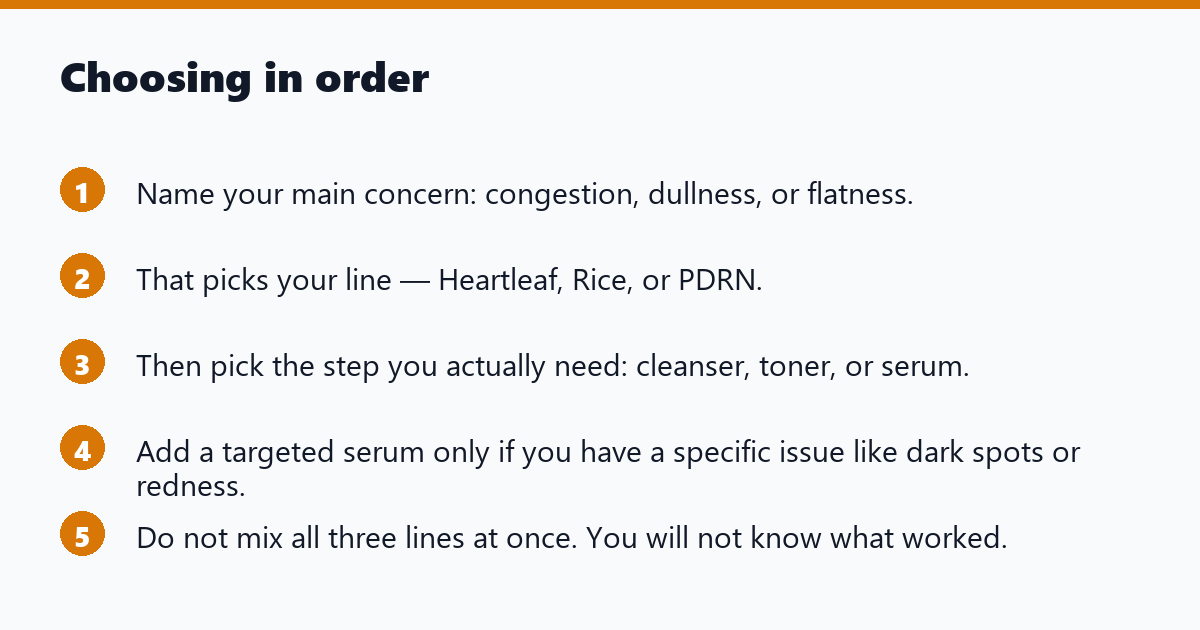
Name your concern first. Congested and oily goes to Heartleaf. Dull and dry goes to Rice. Flat and dehydrated goes to PDRN, with realistic expectations attached. Then pick the step. Done in that order, this is a hard brand to go wrong with.