As an Amazon Associate I earn from qualifying purchases. This post contains affiliate links, which means we may earn a commission if you buy through them — at no extra cost to you.
Quick verdict
If your skin stings when you apply things, feels tight after cleansing, and is flaking in patches, a ceramide-led barrier cream will do more than any serum you add. Skip this category if your skin is comfortable — you are just buying a moisturizer.
Every Korean barrier cream on the shelf promises to repair a damaged skin barrier, and most of them are simply moisturizers with a newer label. “Skin barrier” became a marketing term somewhere around 2022, and the claim stuck.
A Korean barrier cream worth buying is doing something specific, and it is worth knowing what that is — partly so you buy the right one, and partly so you can tell whether your barrier is actually the problem you have.
First: is your barrier actually damaged?
This matters because the fix is different from the fix for ordinary dryness.
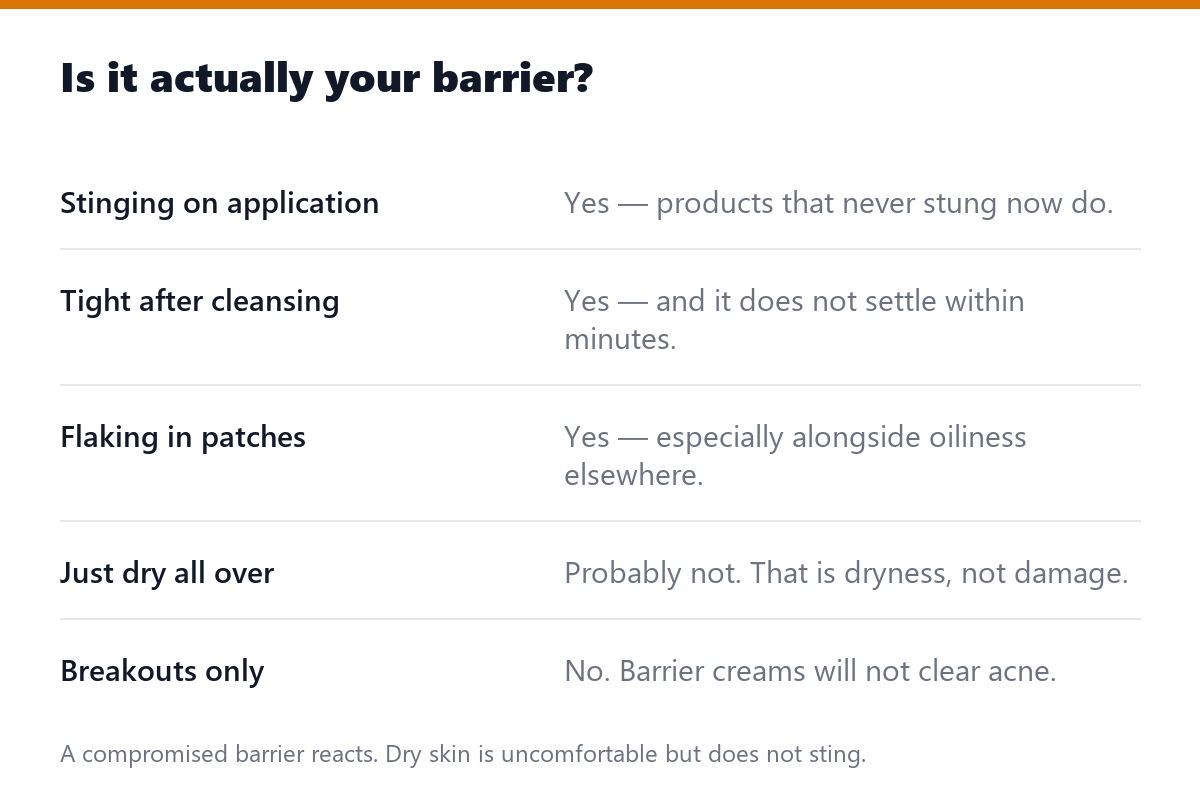
Your skin barrier is the outermost layer — cells held together by a lipid matrix of ceramides, cholesterol, and fatty acids. When that matrix is depleted, water escapes and irritants get in. The symptoms are distinctive:
- Products sting that never used to. This is the clearest signal.
- Tightness after cleansing that does not settle within a few minutes.
- Flaking in patches, often alongside oiliness elsewhere on the face.
- New sensitivity to things you tolerated fine last month.
If your skin is simply dry — uncomfortable but not reactive, no stinging — that is dryness, not damage, and any decent moisturizer handles it.
What a Korean barrier cream needs to contain
Ceramides are the main event. They are a component of the lipid matrix itself, and supplying them topically is one of the few genuinely evidence-backed interventions in this category. Look for them high on the ingredient list rather than mentioned on the front of the box.
Occlusives matter as much. Humectants like hyaluronic acid pull water into skin, but a compromised barrier cannot hold it — you need something on top that slows evaporation while the matrix rebuilds.
Panthenol and cholesterol support the process. Panthenol has decent evidence for soothing; cholesterol is another native lipid.
And critically — nothing else. The most important thing a barrier cream can do is not contain fragrance, essential oils, or actives. This is a category where a short ingredient list is a feature.
The part people skip
No cream repairs a barrier you keep breaking.
Barrier damage is almost always self-inflicted — too much exfoliation, a retinoid ramped up too fast, layering actives that should not be layered, or cleansing twice daily with something harsh. Buying a good cream while continuing all of that is spending money to stand still.
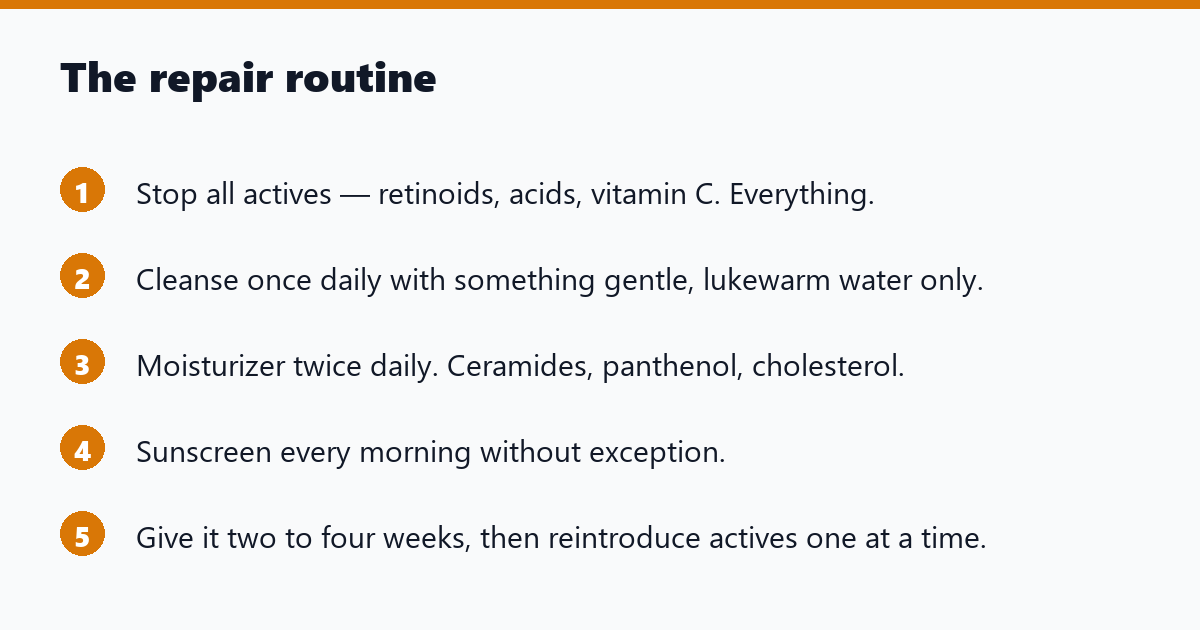
Stop the actives entirely for two to four weeks. All of them. This is the part that actually works, and the cream is what makes it comfortable while your skin rebuilds.
The Korean barrier creams worth considering
The dermatologist default: Illiyoon Ceramide Ato Concentrate Cream
This is the one Korean pharmacists and dermatologists reach for first, and it is aimed at dry and eczema-prone skin rather than at the cosmetic end of the market. The formula uses a ceramide capsule technology that releases gradually as the cream absorbs.
It is unglamorous, comes in a large tub, and is one of the least expensive options here. If you want the thing that works rather than the thing that looks good on a shelf, start here.
Check the current price on Amazon
For reactive skin: ETUDE SoonJung 2x Intensive Cream
SoonJung is built around a deliberately minimal ingredient list — the entire line exists for skin that reacts to things. Panthenol-led, fragrance-free, and formulated to give your skin as little as possible to object to.
Choose this over the Illiyoon if your problem is reactivity rather than dryness.
Check the current price on Amazon
If you want ceramides front and centre: COSRX 7X Ceramide Moisturizer
Multi-ceramide formulas aim to supply a fuller range of the lipids present in the natural matrix rather than a single type. Whether seven meaningfully beats three is not settled, but the formulation approach is sound and COSRX is consistent.
Check the current price on Amazon
For layering: AESTURA ATOBARRIER365 Cream Mist
A mist format solves a specific problem — reapplying through the day over makeup, or adding a layer without disturbing what is underneath. AESTURA is a dermocosmetic brand rather than a beauty one, and the ATOBARRIER line is aimed squarely at compromised skin.
Not a replacement for a cream. A useful addition if your skin gets tight by mid-afternoon.
Check the current price on Amazon
For dry skin that wants richness: DearKlairs Rich Soothing Cream
Some of the options above are light. If your skin is genuinely dry as well as compromised, a richer texture holds moisture through the night better, and this one is formulated without fragrance.
Check the current price on Amazon
What to look for
- Ceramides high on the list, not just on the packaging. Ingredient order reflects concentration.
- No fragrance. Non-negotiable for a product aimed at reactive skin.
- Short ingredient list. Fewer botanicals means fewer chances your skin dislikes one.
- No actives. A barrier cream containing niacinamide at high percentages or exfoliating acids is working against its own premise.
FAQ
How long does barrier repair take?
Two to four weeks of stopping actives and moisturising consistently, for most people. Severe damage takes longer. If nothing has improved in six weeks with actives fully paused, see a dermatologist — that may be something other than barrier damage.
Can I use a barrier cream with retinol?
Long term yes, and it makes retinoids much easier to tolerate. During active repair, no — pause the retinoid entirely, then reintroduce it slowly once your skin has settled.
Is expensive better here?
Less than in almost any other category. The ingredients that work — ceramides, panthenol, cholesterol, occlusives — are cheap and well understood. The dermatologist-favourite option here is also among the least expensive, which tells you most of what you need to know.
Keep reading
Cica Skincare: When You Need It, and When You Don’t
BIODANCE Bio-Collagen Mask: Don’t Sleep In It
The bottom line
A barrier cream is a genuinely useful product with a genuinely narrow job: keep skin comfortable and supplied with lipids while it rebuilds.
It cannot outrun a routine that keeps causing the damage. Stop the actives, pick something ceramide-led and fragrance-free, and give it a few weeks. That sequence works, and no amount of spending replaces the first step.