As an Amazon Associate I earn from qualifying purchases. This post contains affiliate links, which means we may earn a commission if you buy through them — at no extra cost to you.
Quick verdict
Hydrating pads are a daily step; exfoliating pads are a two-to-three-times-weekly treatment. They look the same on the shelf, and using an exfoliating pad daily is the fastest route to a damaged barrier.
Korean toner pads replaced the toner bottle for a lot of people, and the appeal is obvious: one step, no cotton round, no measuring. Wipe and move on.
The problem is that two completely different products are sold in near-identical packaging under the same name, and the difference between them decides whether they help your skin or damage it.
The two types of Korean toner pads
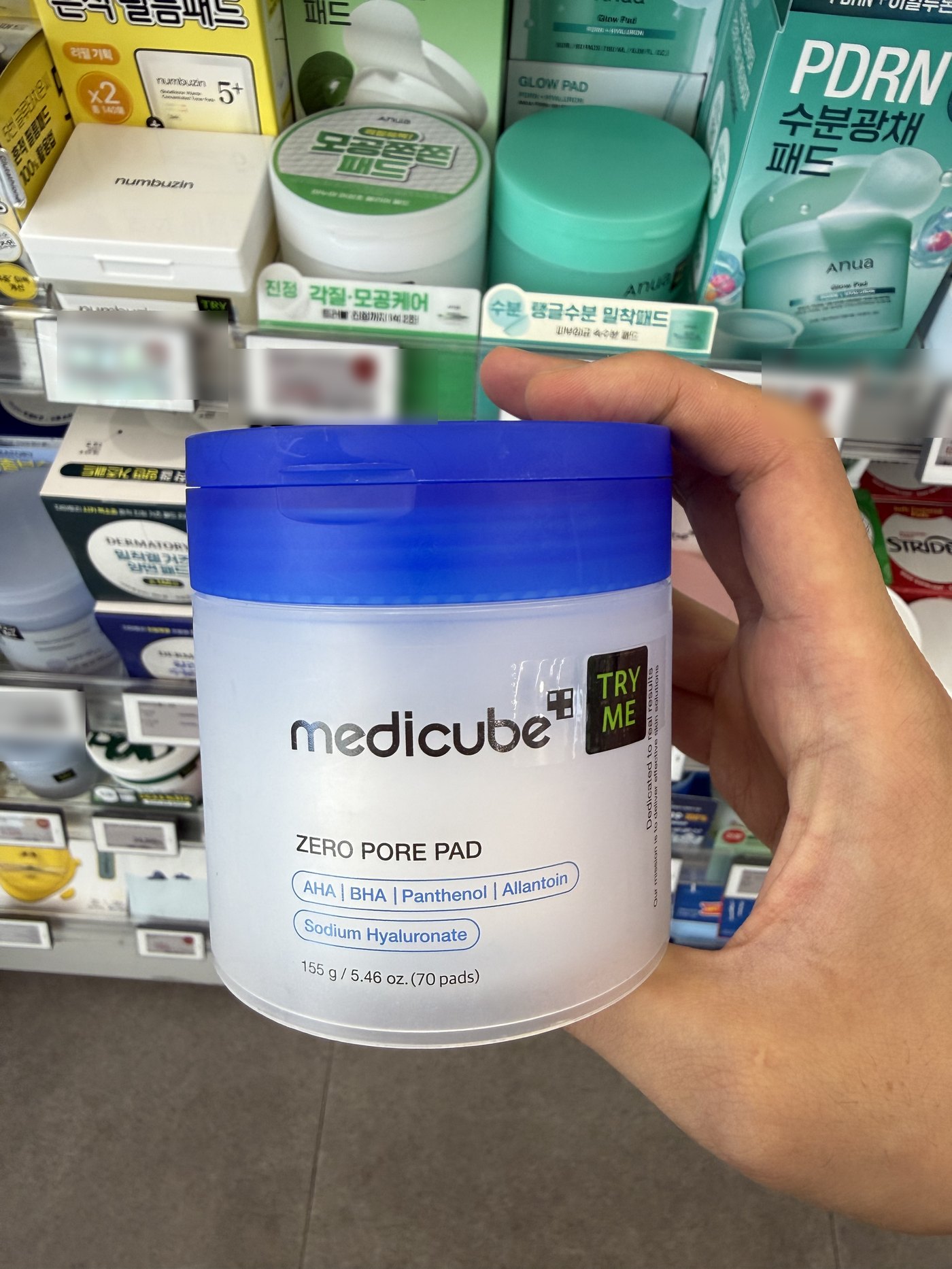
Hydrating pads are soaked in humectants — hyaluronic acid, glycerin, panthenol, botanical extracts. No exfoliating acids. These are a daily step, morning and night, and the worst thing that happens if you overuse them is that you run out faster.
Exfoliating pads contain AHA, BHA, PHA, or a combination. These are a treatment, not a routine step. Two to three times a week is the ceiling for most skin, and some people should be at one.
Both come in tubs of sixty to a hundred. Both have a textured side and a smooth side. Both get described as “toner pads.” The packaging often does not make the distinction obvious, and the marketing rarely emphasises it.
How to tell which one you have
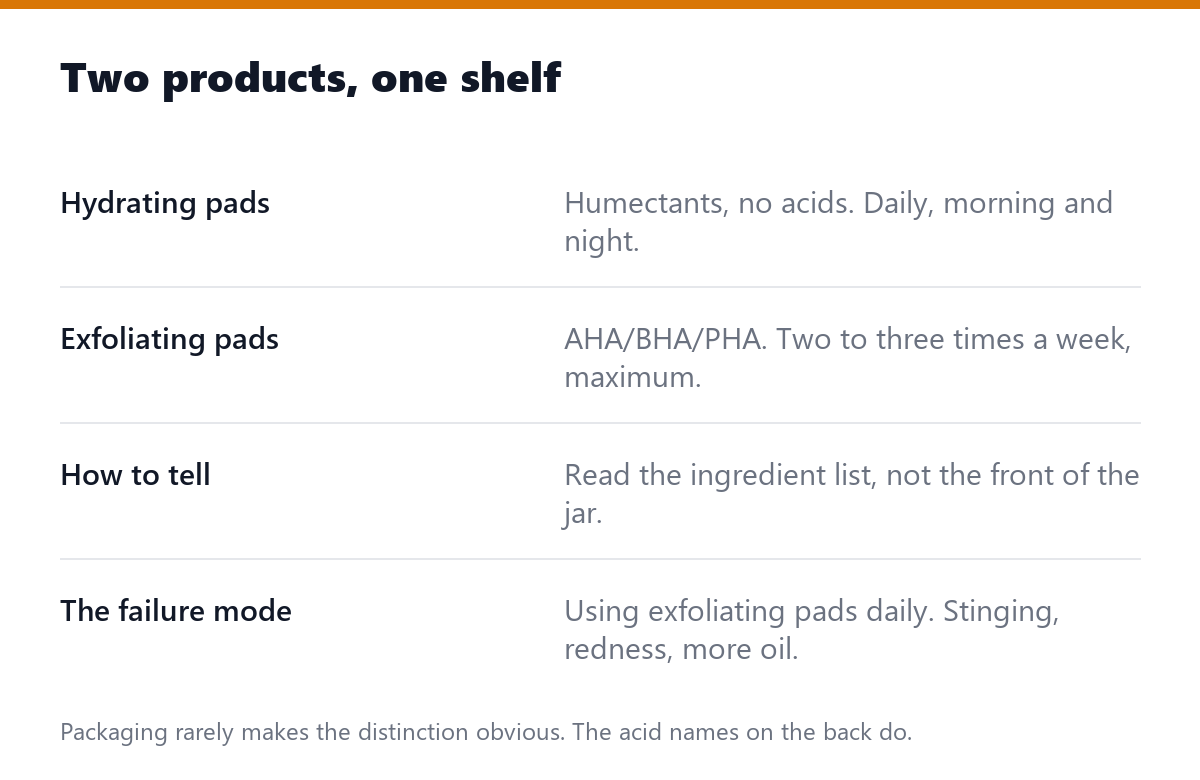
Read the ingredient list, not the front of the jar. Look for these names:
- AHA — glycolic acid, lactic acid, mandelic acid
- BHA — salicylic acid, betaine salicylate
- PHA — gluconolactone, lactobionic acid
If any of those appear, you have an exfoliating pad regardless of what the front says. If the list is glycerin, hyaluronic acid, panthenol, and plant extracts, it is a hydrating pad.
One useful nuance: PHA is the gentlest of the three. The molecule is larger, so it works more slowly and superficially. A PHA pad sits closer to “most days” than a glycolic acid pad ever will — but it is still exfoliation, and it still accumulates.
The failure mode
Here is how this goes wrong, and it goes wrong constantly.
Someone buys exfoliating pads, uses them daily because they came in a tub of a hundred and daily use is what you do with toner. For two weeks their skin looks fantastic — exfoliation does produce an immediate glow. Then it starts stinging when they apply anything. Then it gets red and flaky in patches while somehow also getting oilier.
That is a stripped barrier, and the tub of pads caused it. The oiliness is the confusing part: skin responds to a compromised barrier by producing more oil, so the product bought to fix congestion ends up making it worse.
If that describes you, stop entirely for two weeks and use a plain moisturizer. Then restart at twice a week.
Which Korean toner pads to buy
Daily hydration: MEDIHEAL Collagen Ampoule Toner Pad
If you want the convenience of pads as an everyday step, this is the category to buy in. Collagen here functions as a humectant rather than doing anything structural — but as a daily hydrating step that takes five seconds, it does the job, and there is no acid to accumulate.
A hundred pads in a tub also makes the per-use cost reasonable for something you use twice daily.
Check the current price on Amazon
Congestion and marks: MEDIHEAL Madecassoside Blemish Care Toner Pad
This one pairs mild exfoliation with madecassoside — the centella compound with genuine anti-inflammatory evidence behind it. That combination suits skin dealing with congestion and post-breakout marks, where you want some exfoliation but not at the cost of more irritation.
Still a two-to-three-times-weekly product despite the soothing component.
Check the current price on Amazon
Dullness without acids: SKINFOOD Carrot Carotene Toner Pads
If your complaint is dullness rather than congestion, an antioxidant-led pad addresses tone without adding exfoliation to your week. Useful if you are already using acids elsewhere in your routine and do not want to stack more.
Check the current price on Amazon
Using them properly
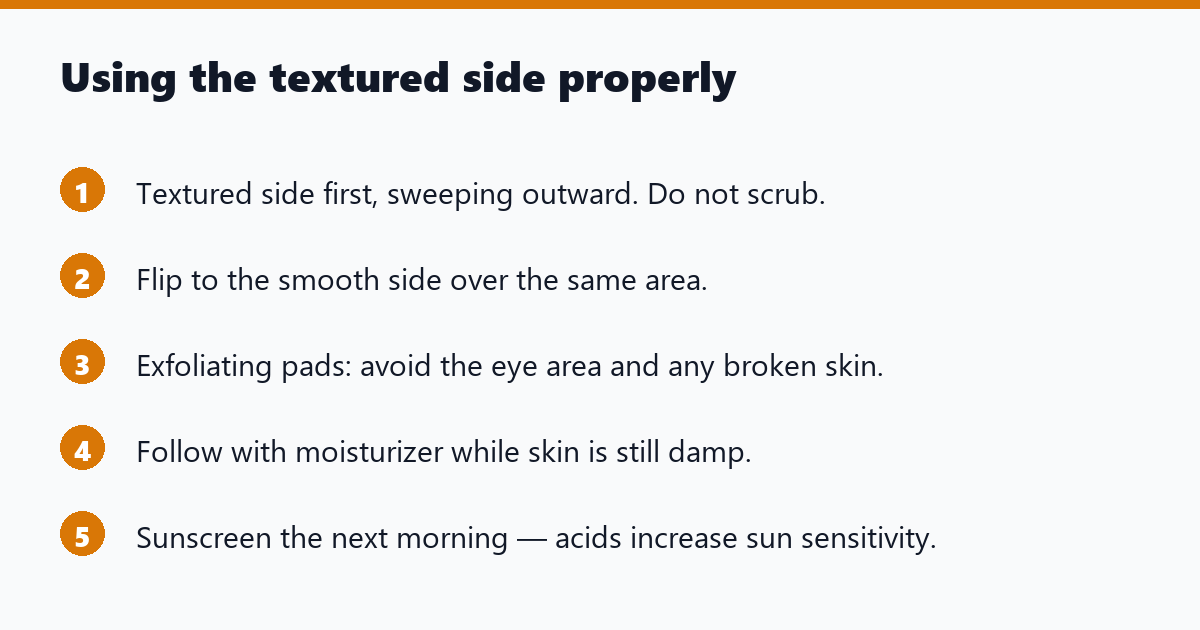
The textured side is for gentle sweeping, not scrubbing. The whole point of a dual-textured pad is that mechanical action and soothing delivery are separated — using the rough side hard defeats the design.
Avoid the eye area with exfoliating pads. Skip any broken or actively irritated skin. And wear sunscreen the following morning without exception — AHAs increase photosensitivity, and exfoliating without sun protection is a net loss.
FAQ
Can I use toner pads every day?
Hydrating pads, yes — morning and night. Exfoliating pads, no. Two to three times a week maximum, and start at one if your skin is at all reactive.
Do I still need a moisturizer?
Yes. Pads are a hydration and prep step, and everything they deliver is water-based. Without an occlusive layer on top, most of it evaporates within the hour.
Are pads better than a liquid toner?
Not better, just more convenient, and the physical wiping adds mild mechanical exfoliation you do not get from patting on a liquid. Pads produce more packaging waste and cost more per use. If you liked your liquid toner, there is no reason to switch.
Keep reading
Korean Barrier Creams: What Actually Repairs a Barrier
Cica Skincare: When You Need It, and When You Don’t
The bottom line
Korean toner pads are a genuinely convenient format, and the category is worth buying into. Just work out which of the two products you are actually holding before you build a daily habit around it.
Hydrating pads: daily, low risk, no thought required. Exfoliating pads: two or three times a week, and read the ingredient list first. Getting that one distinction right is most of what separates people who love these from people whose skin got worse.